When most people think about opening a Demat account in India, they imagine a single standard product — one account type that works for everyone. In reality, SEBI and India’s depository framework have created several distinct types of Demat accounts, each designed for a specific category of investor with specific needs, residency status, or portfolio size. Understanding which type of Demat account is right for you is an important decision that can affect your annual costs, the flexibility of your investment activity, and the range of securities you can hold. This article explains every type of Demat account available in India in 2026, in complete detail, helping you make the most informed choice.
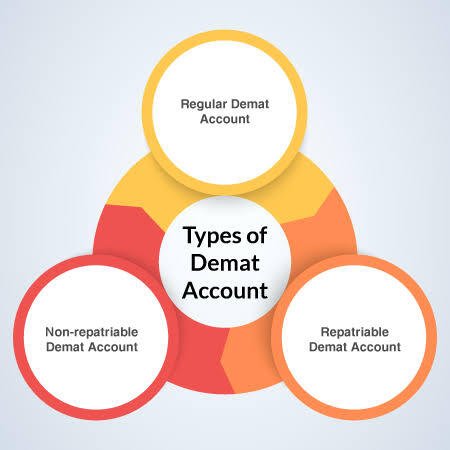
Overview of Demat Account Types in India
| Account Type | Who It Is For | Key Characteristic |
| Regular Demat Account | Indian residents — standard investors | Full-featured — all security types — standard AMC |
| Basic Services Demat Account (BSDA) | Small investors — holdings below ₹2 lakh | Zero AMC for holdings below ₹50,000 |
| Repatriable Demat Account | NRIs — funds transferable abroad | Linked to NRE bank account |
| Non-Repatriable Demat Account | NRIs — funds kept within India | Linked to NRO bank account |
| Demat Account for Minors | Investors below 18 — via guardian | Operated by guardian — converted at 18 |
| Corporate / Institutional Demat Account | Companies and institutions | Special documentation requirements |
1. Regular Demat Account
The Regular Demat Account is the standard, full-featured account opened by the majority of Indian resident investors. It supports all security types — equity shares, bonds, ETFs, government securities, mutual fund units, IPO allotments, sovereign gold bonds, and more. It is provided by any SEBI-registered Depository Participant and carries standard AMC (Annual Maintenance Charges) ranging from ₹300 to ₹750 per year depending on the DP.
- Best for: Working professionals, students, retirees, and anyone who is an Indian resident and wants to invest in the stock market, build a portfolio, or participate in IPOs.
- Key features: Unlimited holdings value, all security types supported, pledge facility, nomination, loan against securities, portfolio monitoring dashboard.
2. Basic Services Demat Account (BSDA)
The Basic Services Demat Account (BSDA) was introduced by SEBI specifically to encourage small investors and first-time investors to participate in capital markets without the barrier of annual maintenance charges.
AMC structure under SEBI guidelines:
| Portfolio Value | AMC Applicable |
| Below ₹50,000 | Zero — completely free |
| ₹50,000 to ₹2,00,000 | Capped at ₹100 per year (maximum) |
| Above ₹2,00,000 | Account converted to Regular Demat — standard AMC applies |
- Key restrictions of BSDA: Only one BSDA can be held per investor (across all DPs). Only one DP can maintain BSDA for one PAN. Physical statements are limited. If holdings exceed ₹2,00,000, the account is automatically upgraded to a Regular Demat Account.
- Best for: First-time investors, students, small savers, and anyone starting their investment journey with a modest portfolio of below ₹2 lakh.
3. Repatriable Demat Account (NRI — NRE-Linked)
The Repatriable Demat Account is specifically designed for Non-Resident Indians (NRIs) who want to invest in Indian securities and retain the flexibility to transfer their investment proceeds — principal and returns — back to their country of residence abroad.
This account is linked to an NRE (Non-Resident External) bank account — a rupee-denominated account funded by foreign currency earnings, where both principal and interest are freely repatriable. Investments made through a Repatriable Demat Account are governed by the Portfolio Investment Scheme (PIS) route under FEMA regulations, which requires RBI permission through the investor’s PIS-designated bank.
- Best for: NRIs earning income abroad who want to invest in Indian equities while retaining the option to take profits back to their country of residence.
4. Non-Repatriable Demat Account (NRI — NRO-Linked)
The Non-Repatriable Demat Account is also for NRIs — but with a critical distinction: investment proceeds from this account cannot be freely transferred abroad (beyond FEMA-permissible limits of USD 1 million per year, subject to tax compliance).
This account is linked to an NRO (Non-Resident Ordinary) bank account — typically used to manage income earned within India (such as rental income, dividends from previous investments, or pension). Investments through a Non-Repatriable Demat Account can be made without the PIS permission route.
- Best for: NRIs who have existing income within India and want to reinvest those earnings in Indian capital markets without repatriation requirements.
5. Demat Account for Minors
A Demat Account for Minors can be opened for individuals below 18 years of age — allowing parents and guardians to begin building an investment portfolio on behalf of their child from a very young age.
- Key features: The account is operated by a natural or legal guardian on behalf of the minor. The guardian’s PAN and KYC documents are used alongside the minor’s birth certificate and proof of identity. The account is fully operational for all security types while the account holder remains a minor.
- On attaining majority: Once the account holder turns 18, the account must be converted to a regular Demat account in their own name — requiring fresh KYC submission, guardian removal, and account reclassification with the DP.
- Best for: Parents who want to start investing for their child’s future — building an equity portfolio for education, marriage, or long-term wealth transfer.
6. Corporate and Institutional Demat Accounts
Companies, partnership firms, LLPs, trusts, and institutional investors such as mutual funds, insurance companies, FPIs (Foreign Portfolio Investors), and banks hold securities through specialised Corporate or Institutional Demat Accounts — which require company registration documents, board resolutions, authorised signatory details, and additional SEBI-mandated compliance documentation.
These accounts operate under more complex regulatory frameworks than individual accounts but function on the same NSDL/CDSL infrastructure.
Choosing the Right Type of Demat Account
| Investor Profile | Recommended Account Type |
| Indian resident — new investor with small portfolio | BSDA (Basic Services Demat Account) |
| Indian resident — active investor, portfolio above ₹2 lakh | Regular Demat Account |
| NRI — wants to repatriate profits abroad | Repatriable Demat Account (NRE-linked) |
| NRI — investing Indian income within India | Non-Repatriable Demat Account (NRO-linked) |
| Parent investing for a child below 18 | Minor Demat Account (guardian-operated) |
| Company or institution | Corporate / Institutional Demat Account |
Frequently Asked Questions (FAQs)
Q1. What is the most common type of Demat account in India?
The Regular Demat Account is the most widely held — suitable for all Indian resident individual investors with no restrictions on holding value or security types.
Q2. What is the advantage of a BSDA over a Regular Demat Account?
BSDA offers zero AMC for holdings below ₹50,000 and capped AMC (maximum ₹100/year) for holdings up to ₹2 lakh — making it significantly cheaper for small investors starting out.
Q3. Can an NRI hold both a Repatriable and Non-Repatriable Demat Account?
Yes. An NRI can hold both account types simultaneously — one linked to the NRE account (repatriable) and one to the NRO account (non-repatriable) — for different investment strategies.
Q4. Can a minor operate their own Demat account?
No. A minor’s Demat account is operated entirely by their natural or legal guardian until the account holder turns 18, at which point it must be converted to an independent regular Demat account.
Q5. What happens to a BSDA if the portfolio value exceeds ₹2 lakh?
The account is automatically reclassified as a Regular Demat Account by the DP — and standard AMC charges apply from that point onward.